There’s always that moment — early in the move, too early really — when you stand in the middle of your place holding a box full of things you packed extra carefully and you think, “Is this first? Is this last? Why is this even here?” That’s where things begin to shift. Figuring out what to pack first when moving isn’t just about boxes — it’s about timing, sequence, and not accidentally packing your coffee maker three weeks too soon. We’ve seen that happen. It gets emotional.
Moving has a rhythm. Ignore it, and the whole process turns into noise. Follow it, and things behave impressively well.
Why Packing Order Matters
Packing order is the difference between a controlled move and a slow-burning disaster. Efficiency, yes. But also sanity. A proper moving packing order keeps you from opening the same box five times because you packed something you still needed. Happens more than people admit.
When people skip a packing plan, things get scattered. You’ll find yourself wrapping items at random, mixing essentials with non essentials, labeling vaguely — and suddenly your moving organization falls apart. Not dramatically. Quietly. Which is worse.
There’s also the matter of energy. Early in the process, you’re sharp. Motivated. Later? Not so much. So you want to front-load the easy, low-risk packing. Build momentum. Save the complicated decisions for when you’ve got fewer of them left.
Items You Should Pack First
Alright, so what actually goes first. Not everything, obviously. That’s where people get tripped up. You start with the things you won’t miss. The quiet items. The ones that sit around being decorative or seasonal or just there.
- Seasonal items are the obvious starting point: Winter coats in summer, holiday decorations in March, beach gear in December — pack it. It’s not doing you any good sitting out. These are classic non essential items, and they belong in boxes early in your packing timeline moving process.
- Then there’s decor. Wall art, extra lamps, that shelf with objects you haven’t touched in years but still feel attached to. Wrap them carefully, sure, but get them out of the way. Clearing visual space helps more than people expect. Rooms start to feel manageable. Almost like progress is real.
- Books. Heavy, yes, but rarely urgent. Pack them in small boxes. Don’t get ambitious with size. That’s how backs get hurt and boxes get dropped.
- Extra linens, guest room items, backup kitchen gadgets — anything that doesn’t serve your daily routine. These fall neatly into the category of what to pack first when moving because they don’t interrupt your life when they disappear into a box.
People often hesitate with sentimental items. Photos, keepsakes. Pack them early, carefully, when you still have patience. Rushing sentimental packing at the end — that’s when things go wrong.
Items to Pack Later
Now we shift gears a bit. Not everything should go into boxes right away. Some things need to stay accessible, functional, alive in your daily routine. This is where a thoughtful moving packing order really earns its keep.
Daily essentials
They come last. Clothes you wear regularly, toiletries, basic kitchen items — those stay out until the final stretch. Packing them too early creates friction. You’ll end up digging through boxes for a toothbrush.
Kitchen basics
You might not use every pot and pan daily, but you do use something. Keep a minimal setup available. One pan, a few utensils, maybe a plate or two. Enough to function without turning your kitchen into a campsite.
Cleaning supplies
People forget this one. You’ll need them — before, during, and after the move. Don’t pack them away too soon or you’ll be improvising with whatever’s left. That’s rarely efficient.
Important electronics
Laptops, chargers, routers — keep those accessible. You don’t want to be halfway through a workday realizing your charger is buried under three layers of “misc stuff”. That’s not a situation you fix quickly.
While you’re thinking about what to pack first when moving, you also need to think about what not to pack yet. Timing isn’t just about starting — it’s about holding back where it counts.
Last-Minute Packing Essentials
Now we get into that final stretch. The air changes a little. Boxes everywhere. Echo in the rooms. You start realizing how much stuff you actually own. It’s a lot.
This is where the essentials box comes in. Non-negotiable. You pack a dedicated box — or bag, honestly — for immediate needs. Think of it as your survival kit for the first 24 hours after the move:
- Daily essentials: Clothes, toiletries, medications, chargers, basic tools. Maybe a snack or two.
- Documents: Passports, contracts, anything important. These do not go on the truck. Ever. You keep them with you. Always. We’ve seen situations where paperwork gets delayed or misplaced, and it complicates everything. Avoid that.
- Keys, wallets, phones: Obvious, but worth saying. Keep them close. Moving day has a way of scattering small items into strange places.
This phase of the packing timeline moving process is less about volume and more about precision. You’re not packing a lot — you’re packing the right things, in the right way, at the right time.
Packing Timeline Overview
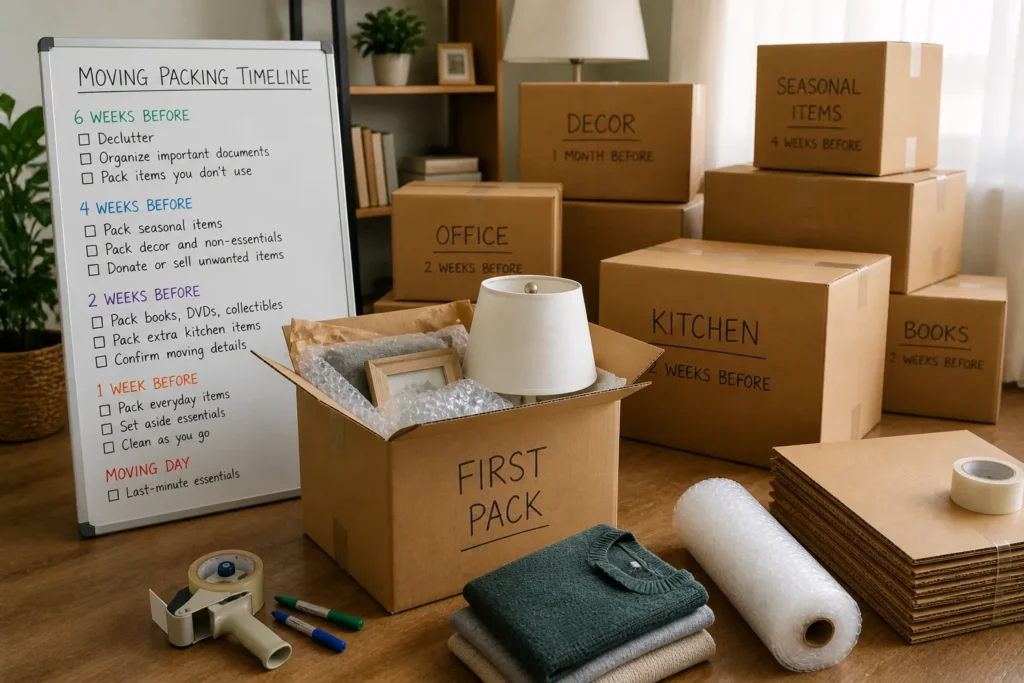
Let’s step back and look at the bigger picture. Because a packing timeline moving strategy isn’t just about individual decisions — it’s about flow. Sequence. A kind of quiet order beneath all the activity.
You begin weeks out, focusing on non essential items. Seasonal belongings, decor, rarely used possessions. This stage is calm, almost methodical.
Then, as the move gets closer, you shift into mid-level packing. Items you use occasionally, but not daily. Extra kitchenware, backup supplies, secondary clothing. The pace picks up. Boxes start stacking. The house begins to change shape.
In the final week, everything tightens. You narrow your focus to essentials. You pack strategically, leaving out only what you absolutely need. This is where your moving packing order shows its value — because if you’ve done it right, there’s no panic.
And then moving day arrives. By that point, packing should be mostly done. You’re not scrambling — you’re transitioning. Loading, checking, moving forward.
And that’s really the goal here. Not perfection. Not some flawless system where everything goes exactly as planned. Just a clear, steady approach to what to pack first when moving, one decision at a time.
Because moving, well, it has a way of testing people. But with the right rhythm, the right timing, and a bit of patience, it becomes something both manageable and predictable.
Ready to get moved? Get a FREE quote now