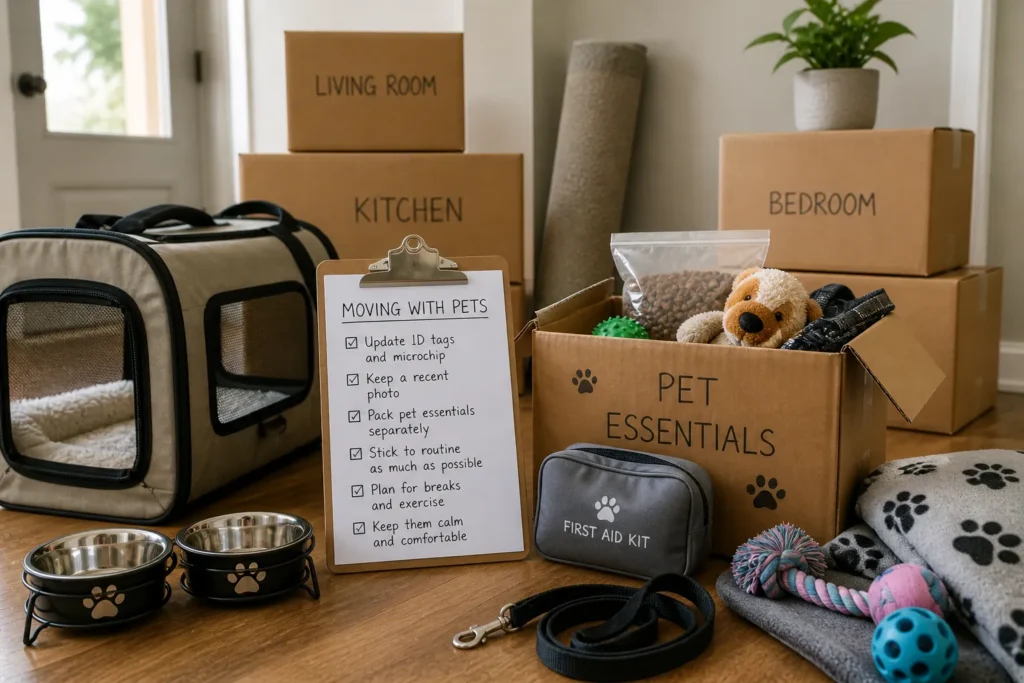
Moving with pets is more than just logistics, it’s a vivid emotion trapped in the wordless mind. You think you’re relocating boxes, but really you’re relocating routines, smells, invisible territories. And animals notice. Immediately. That slight shift in tone when you start packing? They clock it. Always do. This is why moving with pets is part planning, part psychology, and sometimes part veterinary practice.
Let’s get into it. Nothing about pet relocation is ever perfectly linear.
Why Moving Is Stressful for Pets
Animals live in patterns. You don’t always see it, but it’s there — feeding time, favorite corner, that exact patch of sunlight at 3 p.m.. Disrupt that, and things go south.
Moving with pets introduces a kind of chaos they didn’t sign up for. New smells, new sounds, strangers walking in and out. Boxes stacking up like suspicious monuments. Cats especially — moving for a cat means triggering a full existential crisis. Dogs adapt faster, but even then anxiety sneaks in sideways.
Behavioral changes happen. Appetite drops. Or spikes. Some pets get clingy, others go quiet. You might notice pacing. Or hiding. Or that odd stare — like they’re trying to solve a problem you created.
Preparing Your Pet for the Move
Preparation sounds organized. Reality — less so. Still, it matters.
- Routine is your anchor here: Keep feeding times steady, walks consistent, bedtime rituals unchanged. Even if the house looks like a cardboard maze, those small constants tell your pet the world isn’t completely falling apart.
- A vet visit: Do it. Even if everything seems fine. Especially if you’re planning a longer pet relocation. Updated records, maybe a calming recommendation if your pet gets anxious. Some pets do better with mild support. Not all. It depends. Always depends.
- Exposure: Let your pet see the boxes. Smell them. Walk around them. It sounds minor, but it reduces the shock factor later. Packing shouldn’t feel like a sudden invasion.
And if you’re figuring out how to move with a dog, start adjusting travel habits early. Short car rides, gradually longer. Make the car less of a mystery, more of a known space. Familiar equals safer in their mind.
Moving Day Tips for Pets
Moving day. Loud, fast, unpredictable. Doors opening, closing, people carrying things, things disappearing. For a pet, it’s borderline surreal.
Containment becomes important. Not in a harsh way — more like controlled safety. A quiet room. A crate they recognize. Somewhere away from the noise. Because one open door, one moment of panic, and suddenly you’re dealing with a lost pet situation. Nobody wants that.
Safe transport matters too. Whether you’re moving across town or across states, your pet needs a secure setup. Carriers for cats, harnesses or crates for dogs. Loose pets in vehicles—no. Just no.
Water. Ventilation. Breaks. Simple things, but easy to overlook when everything else is happening at once.
Also your own empathy matters a lot. It’s vital. Your voice is one of the few constants they recognize in all the disruption. Use it, let them hear it. Be around to let them feel safe, interact with them. For an animal it matters no less than for a human.
Moving in a hurry? Emergency moving situations? That’s when structure means a lot. Fast doesn’t have to mean careless.
Helping Pets Adjust After the Move
You arrive. New place. Different smells. Different acoustics. Floors might even sound different under their paws. It’s a lot.
- Create a familiar zone: Same bed, same toys, same food bowl. Don’t scatter everything randomly. Give them a base. A starting point.
- Routine again: Feed them at the usual time. Walk at the usual time. Behave in the usual way you used to — yes, they notice that too.
- Don’t lock them up: Some pets explore immediately. Others hesitate. Let them move at their own pace. Don’t force interaction with the new environment. Curiosity will come. Eventually.
To reduce pet stress moving situations usually bring, you’ve got to let those quiet adjustments happen.
Lots of people ask us how to move with a cat — well, patience is key. Cats map their territory mentally. New space means rebuilding that map from scratch. Dogs do the same thing but their nerves are mighty stronger. If it’s not a toy breed, those are as sensitive as cats.
Pet relocation isn’t just physical movement. It’s emotional relocation. Takes a bit more time than you think.
When to Consider Professional Help
Sometimes, you feel like you need some assistance. Maybe your schedule’s too tight. Maybe your pet’s anxiety is more intense than expected. Maybe you just don’t want to risk doing it wrong.
That’s where professional help comes in. Not just movers, but teams who understand moving with pets as part of the bigger picture.
There’s value in experience. In knowing how to coordinate timelines so pets aren’t exposed to unnecessary stress. In handling logistics while you focus on keeping your animal calm.
People usually underestimate how complicated moving with pets can get. Until they’re in it.
If you’re looking for support, Rise Up Moving can handle the heavy side of the move, giving you space to manage what actually matters — your pet’s comfort, safety, and adjustment.
And sometimes, that’s the smartest move you can make. Not the fastest. Not the cheapest. Just the right one.
Ready to get moved? Get a FREE quote now