Some moves change your address. Others quietly rewrite your daily habits. Leaving San Francisco for Seattle tends to belong in the second category.
You remain on the West Coast. Pacific time still works exactly as it always has. The ocean hasn’t gone anywhere. Coffee remains a perfectly respectable topic of conversation. And yet the rhythm shifts. The streets feel different. The weather tells different stories. Even the light seems to arrive with slightly altered intentions.
People often imagine moving from San Francisco to Seattle as a straightforward trip north. Roughly eight hundred miles. Pack the truck. Drive. Unpack. Continue living. There’s truth in that. Just not all of it. Long-distance moving has a curious way of disguising its complexity. The highway looks like one continuous line on a map, but the experience is stitched together from hundreds of smaller decisions. Tiny ones, mostly.
Did the apartment reserve the freight elevator? Who meets the truck at the destination?
Are utilities active before arrival? Will your furniture fit through that beautifully restored Craftsman home’s narrow hallway? The map doesn’t mention those parts. Life politely does.
That’s why planning matters. Not because the trip is impossible — because small oversights have remarkable talent for arriving all at once.
Distance, Transit Time, and Logistics of the SF-to-Seattle Corridor
The drive between San Francisco and Seattle covers roughly 800 to 850 miles, depending on exactly where your journey begins and where it finally ends. Useful information. Incomplete information.
The road itself is only one piece of the relocation. Buildings contribute their own ideas. Schedules contribute a few more. Then traffic quietly joins the conversation.
Eight Hundred Miles Isn’t the Hard Part
People naturally focus on mileage. It’s visible. Easy to understand. Eight hundred miles sounds substantial because, well, it is.
Still, experienced movers rarely begin planning with the highway. They begin with the addresses.
Imagine leaving a downtown apartment in San Francisco where truck access resembles solving an elaborate puzzle involving permits, parking restrictions, and neighbors who have understandably developed opinions about oversized vehicles.
Now imagine arriving at a quiet residential neighborhood outside Seattle with broad driveways and generous unloading space.
Or reverse the situation. Leave a suburban home. Arrive at a downtown high-rise where every delivery must be scheduled several days ahead and the elevator becomes available for exactly ninety carefully supervised minutes.
Same distance. Entirely different move.
Transit Time Isn’t Just Driving Time
A personal road trip might fit comfortably into a day and a half. Professional moving schedules follow different rules. Loading takes time. Careful packing takes time. Traffic contributes its own ideas. Rest periods for drivers exist for excellent reasons. Delivery windows need coordination.
Occasionally multiple shipments travel together because logistics enjoys efficiency almost as much as accountants do.
Long-distance moving prefers flexibility over impossible promises. It has earned that preference.
Weather Quietly Joins the Planning Meeting
California weather can encourage a certain optimism. Then the Pacific Northwest politely reminds everyone that rain exists. Quite consistently.
Seattle doesn’t stop functioning because of rain. Nobody there appears particularly interested in discussing it. Moving companies, however, plan for changing conditions because moisture and cardboard have maintained a complicated relationship for generations.
Protective materials matter. Loading procedures matter. Timing matters. None of this makes the relocation difficult — it simply makes preparation more valuable. Preparation ages remarkably well.
The Highway Is Only the Middle Chapter
People picture the truck rolling north. Reasonable image. The beginning and ending usually require more attention: packing, loading, access, furniture protection, building management, parking, unloading. Placement inside the new home. Assembly.
The driving portion often becomes the simplest section of the entire relocation and the longest distance sometimes contains the fewest decisions.
Every Household Travels Differently
Two families moving to Seattle may leave on the same morning. One arrives at a single-family home. The other reaches a downtown apartment. One transports mostly furniture. The other carries artwork, antiques, musical instruments, and an improbably large collection of houseplants that somehow all possess names.
Moving reveals fascinating things about people. Every inventory tells a slightly different story. Professional SF to Seattle movers don’t simply calculate cubic feet — they quietly adjust the plan to fit the story they’re actually moving.
Cost Expectations for This Route and What Affects the Final Number
Eventually every conversation arrives at the same destination. Price. The interesting part is that people often expect one tidy answer and long-distance moving has never been especially interested in tidy answers.
The San Francisco to Seattle moving cost depends on a collection of factors working together rather than one magical number hiding inside a calculator.
Distance certainly contributes. It’s simply sharing responsibility with several other variables.
The Amount You Move Usually Matters More Than People Expect
Imagine relocating from a studio apartment. Now imagine moving from a five-bedroom house filled with custom furniture, outdoor equipment, books collected over twenty years, and a dining table that appears to have been carved from a tree still emotionally attached to the forest.
The trucks may travel the same route. Almost everything else changes. More labor. More packing materials. More loading time. More unloading time. Sometimes more vehicles. Volume quietly influences nearly every stage of the move and boxes have an astonishing ability to multiply while nobody seems to be watching.
Specialty Items Change the Conversation
Most belongings fit comfortably into established moving procedures. Some ask for individual attention. Grand pianos. Wine collections. Fine art. Large aquariums. Antique furniture. Commercial gym equipment. Oversized mirrors. Professional packing methods become more specialized.
Protection changes. Equipment changes. Occasionally the route through the house changes too. One unusual object can quietly reshape the entire moving plan. Not because it’s impossible — because it’s worth treating differently.
Packing Services
Some households genuinely enjoy packing. Or at least tolerate it with admirable patience. Others reach a point where every empty box begins looking strangely personal, and the idea of wrapping another kitchen glass feels like an unnecessary test of character.
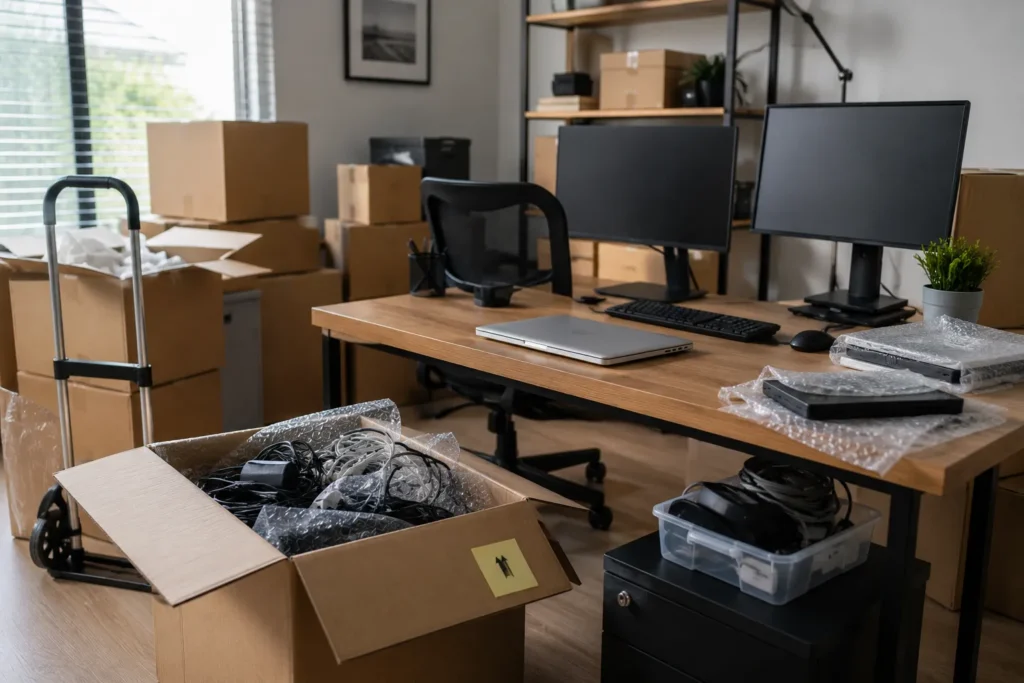
Professional packing naturally increases the overall investment. It also saves time, provides higher-grade protective materials, and reduces the chance that treasured belongings spend eight hundred miles inside a carton originally intended for grocery deliveries.
There’s nothing wrong with recycled boxes. They simply weren’t designed with cross-state adventures in mind.
Access Can Quietly Reshape the Budget
It’s easy to think about moving in terms of distance alone. Buildings disagree.
A truck parked directly outside your front door creates one kind of workday. A truck parked half a block away because street parking has developed other priorities creates another. Long carries. Steep driveways. Multiple flights of stairs. Freight elevators. Loading restrictions. Security procedures. None of these sound especially exciting but they’re still important since each one influences the amount of labor required, and labor naturally becomes part of the overall price.
Cities have personalities. Buildings somehow manage to develop personalities too.
Timing Has Financial Consequences
Summer remains busy. Holiday weekends become popular. Month-end lease cycles create busy calendars.
Sometimes shifting a move by just a few days opens far more scheduling flexibility. Not always. Still, it’s worth discussing options before settling on a specific date.
People often assume moving companies simply tell them the price. Good companies usually explain why the price looks the way it does. That conversation matters. Understanding an estimate is often more valuable than receiving one quickly.
Temporary Storage Occasionally Solves Larger Problems
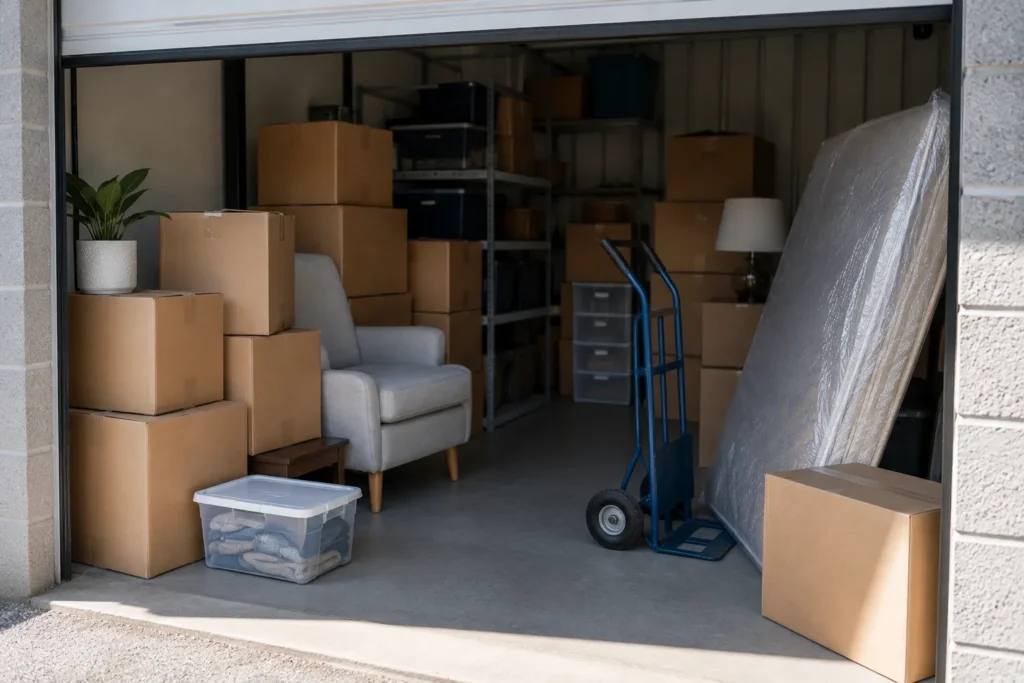
Life doesn’t always line up with moving trucks. Perhaps your Seattle home isn’t quite ready. Perhaps renovations aren’t finished yet. Perhaps your lease begins next week instead of tomorrow. Short-term storage creates breathing room. It becomes another part of the relocation rather than an inconvenience interrupting it.
Sometimes the smoothest move includes a short pause. That pause can remove an impressive amount of pressure from the schedule.
What Changes When You Move From the Bay Area to the Pacific Northwest
The furniture arrives. Eventually the boxes disappear. The larger adjustment begins afterward. People often prepare carefully for the move itself while giving much less attention to the new routines waiting on the other side. Those routines deserve some respect.
Daily Life Finds a New Pace
Seattle and the Bay Area share certain qualities. Technology industries. Walkable neighborhoods. Excellent coffee. Access to nature. Creative communities. Beyond those similarities, daily life begins leaning in its own direction.
Commutes feel different. Neighborhood layouts change. Weekend habits evolve. People discover parks instead of beaches. Ferries instead of bridges. Forest trails where yesterday there were coastal cliffs. The landscape quietly encourages different adventures. Without asking permission.
The Climate Changes More Than the Temperature
People naturally think about rain. Fair enough. The bigger adjustment often involves consistency.
Gray mornings become familiar companions through parts of the year. Sunlight follows a different seasonal rhythm. Summer evenings stretch surprisingly long. Winter afternoons arrive with remarkable efficiency. None of this is inherently better or worse — it’s simply different.
Homes adapt. Wardrobes adapt. Eventually, so do people.
Your Home Will Feel Strange for a While
This happens almost every time. The first night feels temporary. The second isn’t much different.
Kitchen utensils appear inside boxes marked “Office”. A favorite chair somehow ends up facing the wrong wall. You spend fifteen minutes looking for scissors before remembering you carefully packed them in a place so logical that it temporarily escaped memory altogether.
Moving has a peculiar sense of humor. Fortunately, it rarely lasts forever.
Don’t Rush the New City
One mistake people occasionally make involves trying to understand Seattle immediately. Cities don’t reveal themselves all at once. They unfold gradually. One neighborhood at a time.
One coffee shop. One bookstore. One walking route. One conversation with a neighbor who casually recommends a bakery you’ve somehow already driven past three times.
The city introduces itself in pieces. Allow it. There’s no prize for learning everything during your first weekend.
The Relocation Ends, The Transition Continues
Every Bay Area to Seattle relocation eventually reaches an interesting moment. Not moving day. Not unloading day. A quieter one.
You stop using GPS to find the grocery store. You instinctively know which route leads home. One of the local cafes is now your favorite one and you can’t remember when exactly that happened. Friends begin asking how life in Seattle is going, and instead of describing cardboard boxes or moving trucks, you find yourself talking about neighborhoods, hiking trails, local restaurants, and that unexpectedly beautiful view you discovered during an ordinary Tuesday afternoon.
That’s usually the signal. The move has quietly slipped into the past. Looking back, it’s tempting to think the journey was really about mileage. Or estimates. Or inventories. Or loading schedules. Those things certainly mattered since they helped everything arrive safely. Still, they weren’t the destination. The destination was much smaller. Much quieter.
It was the morning when your coffee mug already lived in the correct cabinet, your favorite chair stood exactly where your instincts expected it to be, your books had returned to their shelves, and Seattle no longer felt like the place you had moved to.
It simply felt like home. That’s the real ending to moving from San Francisco to Seattle. Not when the truck drives away. When your life gradually stops noticing that it ever had to move at all.