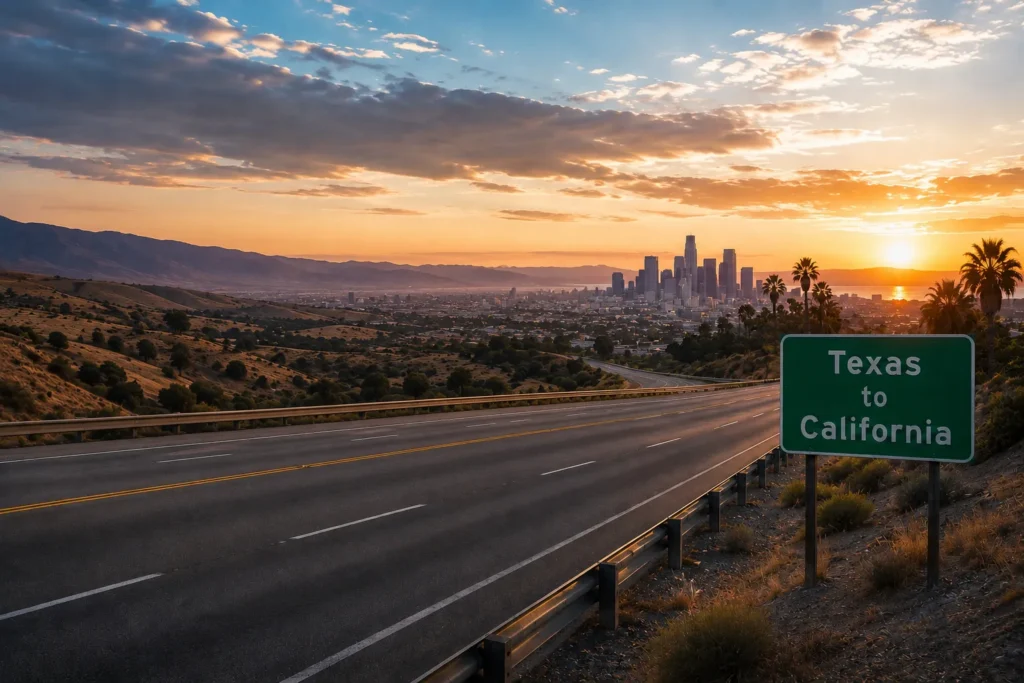
People often discover Oakland in reverse. They begin by looking at San Francisco. Then the apartment listings appear. A long pause follows. Someone refreshes the page, convinced a decimal point has wandered into the wrong neighborhood. It hasn’t.
That’s usually when Oakland enters the conversation. Not as a compromise. That’s the first misconception worth throwing gently out the window.
Oakland isn’t San Francisco’s understudy waiting backstage for the lead actor to call in sick. It has never seemed particularly interested in being someone else’s version of success. It built its own identity years ago and, rather stubbornly, continues doing exactly that.
Good for Oakland.
People searching “moving to Oakland CA” often arrive with one question sitting quietly underneath all the practical ones. “Will it actually feel like home?” Notice that nobody asks, “How many grocery stores are nearby?” Not first, anyway.
People ask about neighborhoods, commute times, housing, schools, coffee shops, parks, restaurants, safety, weather, and rent. But underneath all those questions sits something softer. “Can I imagine an ordinary Tuesday here?” That’s the real test.
Oakland has a curious habit of revealing itself slowly. Drive through one neighborhood and you’ll think you’ve figured the city out. Drive another ten minutes and everything changes. Victorian homes suddenly appear beneath enormous trees. Warehouses become breweries. Quiet residential streets fold into lively commercial corridors where cafés spill onto sidewalks and bookstores somehow convince people to lose entire afternoons inside them.
Cities are allowed to contain contradictions. Oakland seems to collect them and somehow they fit together.
How Oakland Compares to San Francisco for People Considering the East Bay
The comparison is unavoidable.
People planning an East Bay relocation almost always begin with San Francisco because, well, everyone does. Then Oakland quietly waits its turn.
Oakland Breathes a Little Differently
San Francisco often feels compact. Dense. Everything layered on hills that appear determined to remind your legs they’re still alive. Oakland spreads itself out more comfortably. Neighborhoods have room. Streets widen. Trees seem taller. The pace softens — not because people are moving slowly, but because the city doesn’t constantly feel like it’s balancing on the edge of its own urgency.
Hard thing to explain. Easy thing to notice. Especially after living there for a while.
The East Bay Has Its Own Identity
Oakland has long developed its own cultural identity. Independent restaurants. Art spaces. Music venues. Local businesses that somehow survive despite every prediction insisting they shouldn’t. Neighborhood festivals. Community markets. Public parks where people gather simply because the afternoon feels pleasant enough to justify existing outdoors.
The city feels creative. Not performatively creative. Just naturally so.
Like someone who sketches in the margins of notebooks without thinking anyone is watching.
### Housing Changes the Conversation
Many people **moving from SF to Oakland** notice the shift almost immediately.
Housing budgets begin behaving differently.
Again, not magically.
Oakland isn’t inexpensive.
Let’s retire that fantasy before it causes disappointment.
Still, many newcomers discover possibilities they hadn’t seriously considered across the bay.
Larger apartments.
More living space.
Maybe an extra bedroom.
Maybe a backyard.
Maybe parking that doesn’t require equal parts strategy, optimism, and beginner-level astronomy.
Small victories deserve appreciation.
Nature Quietly Joins Everyday Life
Green space. Parks. Regional trails. Views of the Bay. Redwood groves a surprisingly short drive away.
Morning hikes become realistic instead of requiring military-grade logistical planning. You can begin the day beneath towering trees and finish it having dinner downtown.
California has always enjoyed dramatic transitions. Oakland simply participates.
Neighborhood Breakdown: Rockridge, Temescal, Grand Lake, Jack London Square
Here’s where relocation becomes personal. One street. One apartment. One neighborhood.
Everything else comes afterward.
Rockridge
Rockridge has the quiet confidence of someone who never needs to introduce themselves twice. Tree-lined streets. Independent bookstores. Neighborhood cafes. Restaurants where reservations occasionally become useful but conversation remains more important than appearances.
Walkability defines much of daily life here. People stroll to breakfast. Walk dogs. Browse small shops without any particular destination. An hour disappears — nobody seems terribly concerned. That’s generally a positive sign.
Housing reflects the neighborhood’s popularity. It usually does. Places people genuinely enjoy living tend to notice.
Temescal
Temescal feels wonderfully alive. Old storefronts share blocks with inventive restaurants, bakeries, coffee shops, galleries, and small businesses that appear entirely comfortable doing things their own way.
Spend enough afternoons here and you’ll begin noticing little rituals. The same couple buying pastries every Saturday. Someone reading novels outside the same cafe. Cyclists weaving through side streets with suspicious levels of confidence.
Neighborhoods reveal themselves through repetition. Temescal rewards paying attention.
Grand Lake
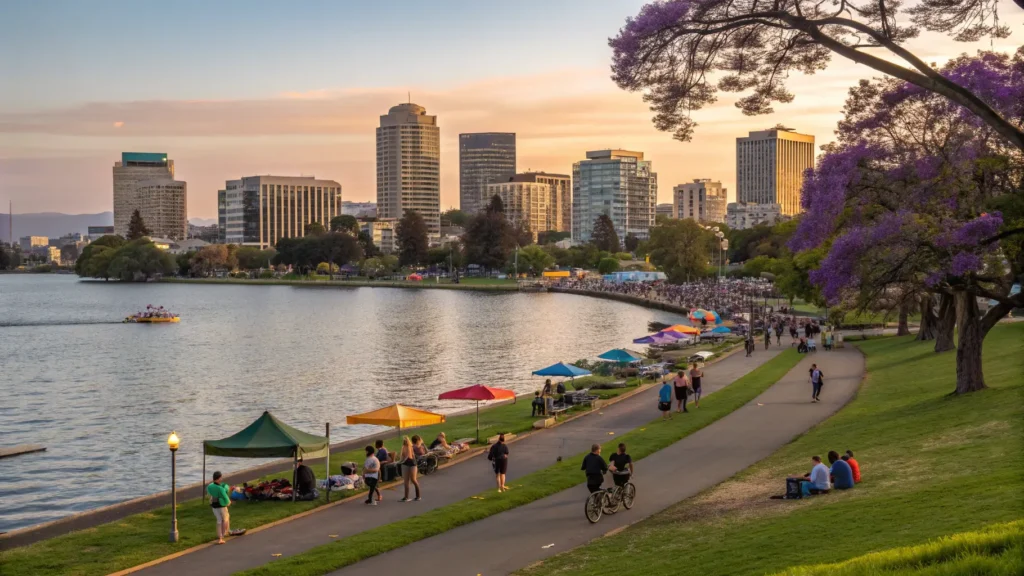
Grand Lake carries a slower rhythm. Lake Merritt sits nearby, quietly shaping the pace of everyday life. Morning runners. Families pushing strollers. Weekend farmers markets. Evening walks stretching longer than intended because the weather politely refuses to become unpleasant.
Water changes cities. Not physically — emotionally. People linger longer near it. Always have.
Jack London Square
Few parts of Oakland transform quite so noticeably depending on the hour.
Morning begins with commuters collecting coffee before trains depart. Afternoons fill with people wandering along the waterfront. By evening, restaurants, bars, outdoor seating, and Bay views quietly take over the conversation.
Living here often appeals to people who enjoy energy close at hand. Not necessarily every night. Just knowing it’s there.
The waterfront has a peculiar talent for making ordinary errands feel slightly more interesting. Buying groceries somehow feels different when cargo cranes and sailboats occasionally wander into the background.
Human beings are surprisingly easy to impress.
Every Neighborhood Changes Slightly Block by Block
This part deserves more attention than online rankings usually provide. Oakland doesn’t always transition gradually. One street may feel entirely different from the next. Sometimes dramatically so.
Neighborhoods reveal different versions of themselves depending on when you ask the question. Maps don’t capture that.
Cost of Living, Commute to SF, and What Daily Life in Oakland Actually Looks Like
Let’s discuss money. Everyone eventually does.
Oakland Isn’t Cheap
Some newcomers arrive expecting bargain housing simply because prices often compare differently with San Francisco. That expectation deserves gentle adjustment. Oakland remains part of one of the country’s most expensive metropolitan regions. Housing commands serious budgets. Rent reflects strong demand. Home prices continue attracting plenty of attention.
Still, relative value exists. The same budget may create additional possibilities compared with many San Francisco neighborhoods. Space occasionally becomes easier to negotiate. That matters. Especially after several years of living with bicycles stored in hallways and winter coats negotiating shelf space with kitchen appliances.
Commuting Across the Bay Becomes Routine
Many residents continue working in San Francisco. BART connects large portions of Oakland with the city. Bridges carry thousands of commuters every day. Ferries provide another option for some travelers. Each method develops loyal supporters. And equally loyal critics.
Transportation discussions around the Bay Area occasionally resemble debates about pizza. Everyone has a favorite. Everyone remains convinced they’re correct.
Reality usually depends on exactly where you live and where you’re headed. Context wins again.
Daily Life Quietly Finds Its Rhythm
The first few weeks feel unfamiliar. Naturally. Then routines begin collecting. You discover which grocery store somehow always has better produce. Which coffee shop remembers names. Which route around Lake Merritt feels best just before sunset. Where weekend farmers markets become unexpectedly dangerous for anyone claiming they’ll “just pick up a few things”. Fresh bread has remarkable persuasive abilities. So do local peaches.
Oakland Rewards Curiosity
The city isn’t particularly interested in revealing itself all at once. Some places feel exhausted after a weekend — Oakland rarely does.
You’ll notice murals you somehow missed ten previous times. Find restaurants hidden behind storefronts you’ve walked past for months. Stumble across neighborhood events because someone taped a handmade poster to a telephone pole instead of launching a polished marketing campaign.
It feels genuine. A word that’s become terribly overused. Yet occasionally it still fits. Here, it often does.
Choosing Oakland Means Choosing a Different Kind of Bay Area Life
People searching for an Oakland neighborhoods guide usually begin by comparing square footage. Commute times, monthly rent, parking. Entirely reasonable. Necessary, even.
Then something unexpected happens. The comparison slowly shifts.
Instead of asking which apartment has the larger living room, people begin wondering which neighborhood they’d actually enjoy walking through after dinner. Which local bookstore they’ll accidentally spend too much money in. Which park they’ll visit so often it stops feeling like a destination and simply becomes part of Tuesday.
That’s when relocation becomes interesting because homes are only partly about walls. The rest happens outside the front door.
For many people relocating to Oakland, the city gradually stops being “the affordable alternative across the Bay”. That description was never especially fair. Oakland has always been more complete than that. More independent. More layered. It asks for a little patience. A little exploration. Perhaps a willingness to abandon the idea that one neighborhood can explain an entire city.
Cities don’t work that way. Certainly not this one.
Eventually, moving from SF to Oakland becomes less about leaving somewhere behind and more about discovering an entirely different rhythm inside the same metropolitan region.
The skyline changes. The commute changes. The grocery store changes. The sounds drifting through open windows on a Sunday afternoon change too. Somewhere between morning coffee in a neighborhood cafe, evenings beside Lake Merritt, conversations with people who’ve lived on the same block for twenty years, and the realization that you’ve started recommending restaurants to visiting friends instead of asking for recommendations yourself, something subtle takes place.
The city stops introducing itself. Instead, it begins assuming you’ll be here tomorrow. And somehow so do you.